Toggle Nav

Coilovers or Lowering Springs? Choosing the Right Suspension for Your Car
November 22, 2026
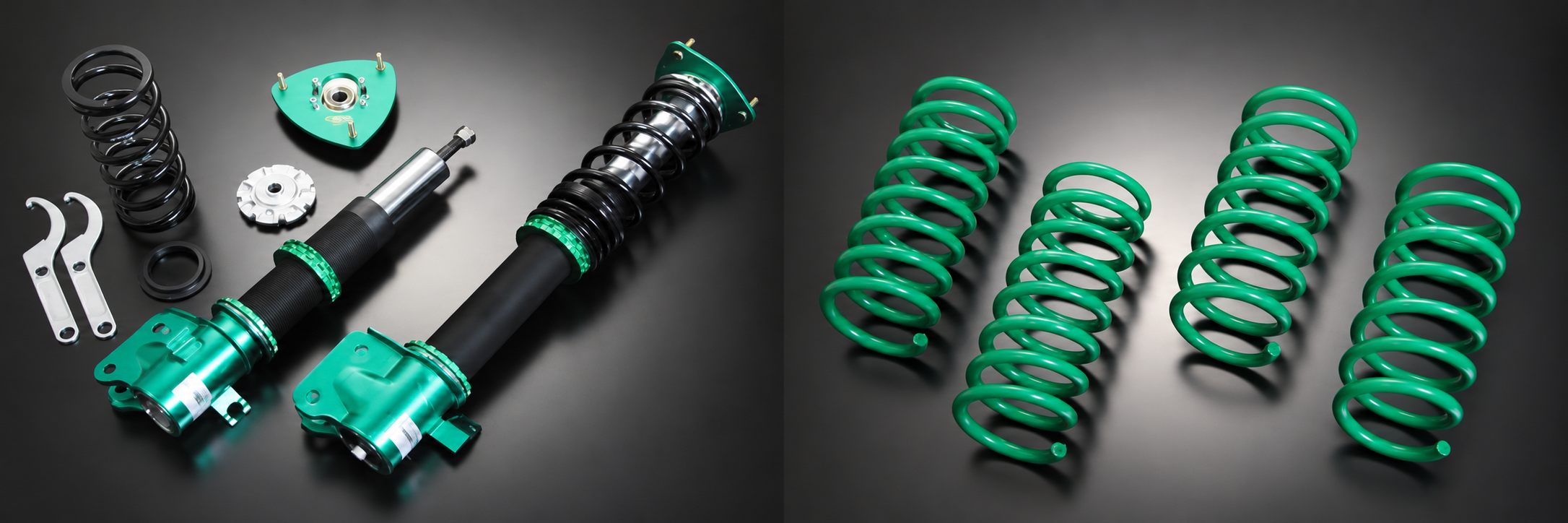
A smaller arch gap, a better stance, a car that feels sharper through the corners—there are plenty of reasons to upgrade your suspension. But should you choose lowering springs or spend the extra on coilovers?
The answer comes down to what you want from the car and how much adjustment you’ll actually use.
It’s a question we get regularly at Tarmac Sportz. Here’s what to consider before spending your money.
What are lowering springs?
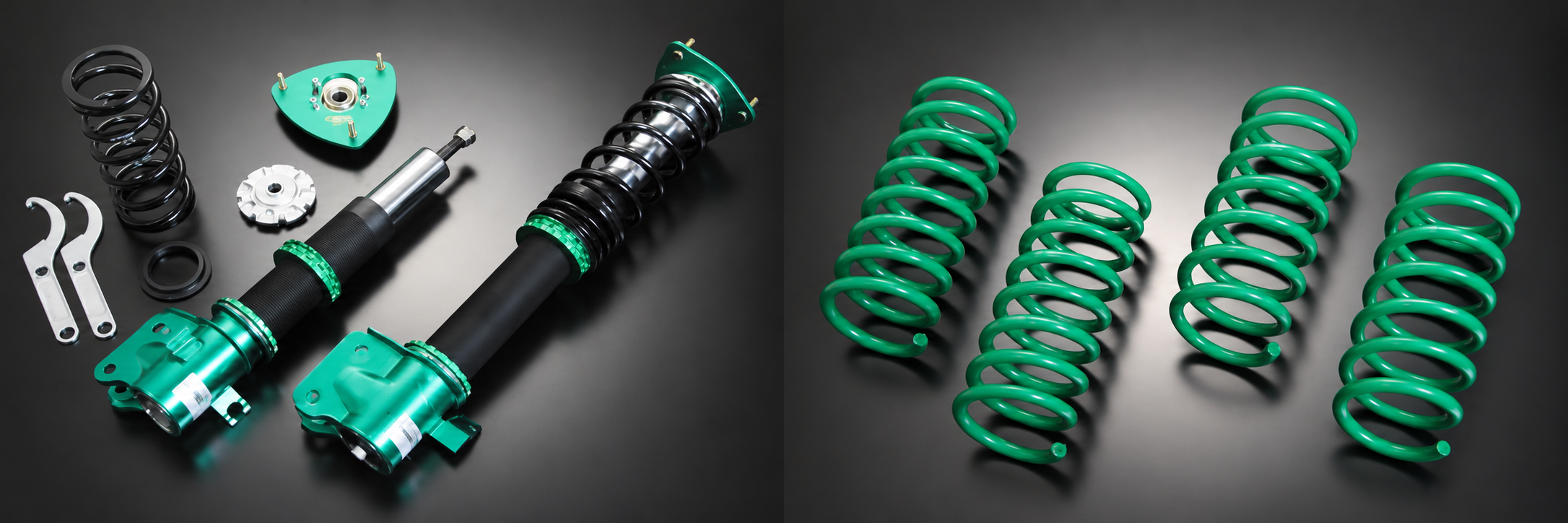
Lowering springs replace your existing springs to give the car a lower ride height. Depending on the kit, they can work with suitable original shock absorbers or matched aftermarket dampers.
If you want a modest drop without adjustable suspension, they’re usually the more affordable route. You choose the springs and the amount of lowering they provide; there’s no ride-height adjustment to fine-tune afterwards.
Check the application notes before deciding on a kit. The quoted drop depends on the vehicle and its original suspension, so two versions of the same model won’t necessarily sit identically.
Can I keep my existing shocks?
Possibly—but their condition matters just as much as whether they’re compatible.
If your dampers are tired, a fresh set of lowering springs won’t bring them back to life. Lowering also changes the available suspension travel, so the springs and dampers need to work together.
Before ordering, check whether the shocks, top mounts or other components need replacing too.
A spring kit can look like a bargain until you add everything needed to fit it properly. Work out the cost of the complete job before comparing your options.
What do coilovers offer?
Aftermarket coilover kits generally replace both the springs and dampers, with ride-height adjustment within the manufacturer’s specified range.
That gives you more control over where the car sits. It can be useful when working around a particular wheel setup or preparing a car for different uses.
Some kits also offer damping adjustment, allowing you to alter how the dampers respond. Not every kit includes it, though, so check the features rather than assuming all coilovers offer the same adjustment.
TEIN’s Street Basis and Street Advance kits, for example, have different adjustment features. It pays to know what you’re buying—and whether you need those extra options.
Are coilovers uncomfortable?
They don’t have to be. The kit you choose and the way it’s set up make a big difference.
Spring rates, damping, available travel and ride height all affect how the car feels. A road-focused kit at a sensible height can feel very different from a firm track setup.
Adjustable damping gives you something to work with, but it won’t turn an unsuitable kit into the right one. Start with the manufacturer’s recommended settings, then make gradual changes.
Turning everything to its stiffest setting isn’t a shortcut to better handling.
Which should you choose?
Think about what you need the suspension to do:
| What you want | Worth considering |
|---|---|
| A modest drop with suitable, healthy dampers | Lowering springs |
| A fixed-height suspension refresh | Matched springs and dampers |
| Control over the final ride height | Coilovers |
| More scope to adjust the setup for road and track use | A suitable coilover kit with the required adjustment |
For a daily driver, picture your usual journeys. The speed bumps on the way to work, the rough stretch of road near home and the steep driveway will all still be there once the car is lowered.
Choose a setup you’ll enjoy using on those roads.
Lower isn’t always better
When you can adjust the ride height, it’s tempting to keep winding it down. But the lowest setting won’t necessarily give you the best handling.
Too little clearance can leave you with rubbing tyres, scraping underneath and reduced usable suspension travel.
The right height works with your wheels, tyres and everyday driving. Aim for a setup that looks how you want and still lets the suspension do its job.
Budget for fitting and alignment
Whichever route you choose, include fitting and an alignment check in the budget.
Changing ride height can alter wheel geometry, and any worn suspension components should be addressed before the final alignment.
Plan the complete job from the start. Spending the whole budget on the kit leaves little room for the fitting, replacement parts and setup needed to finish it properly.
Need a hand choosing?
Tell the Tarmac Sportz team what car you have, your current wheel setup, your budget and how you use it.
If you want a sensible drop for everyday driving, say so. If regular track days are part of the plan, tell us that too. Those details help us narrow down the options that suit you.
We can help you choose suitable springs or coilovers and discuss fitting at our Derby workshop.
Recent Posts
-
10 Nissan 370z Must Have Deals at Tarmac Sportz this Black Friday
 November 24, 2026
-
10 Nissan 350z Must Have Deals at Tarmac Sportz this Black Friday
 November 24, 2026
-
Will These Alloys Fit My Car? Getting Wheel Fitment Right
 November 23, 2026
-
Coilovers or Lowering Springs? Choosing the Right Suspension for Your Car
November 22, 2026
-
Choosing an Exhaust for Your Car: What to Consider Before Buying
 November 20, 2026