Toggle Nav

Will These Alloys Fit My Car? Getting Wheel Fitment Right
November 23, 2026
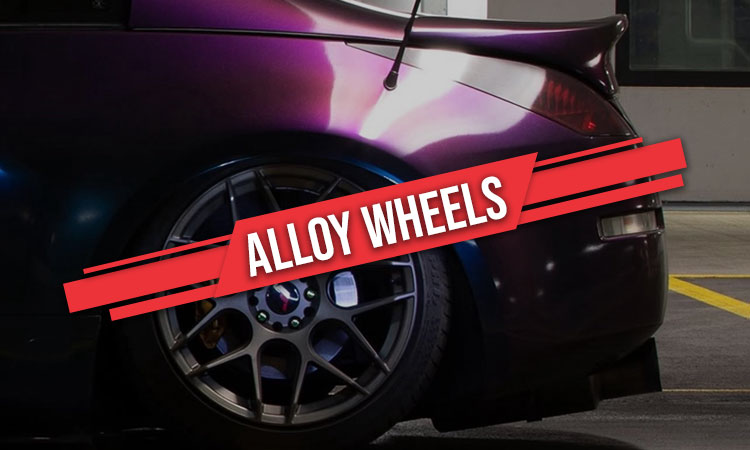
Choosing New Alloys? Here’s How to Get the Fitment Right
Choosing new alloys is the fun part. You find a design you love, picture them on the car and start wondering how soon you can get them fitted.
Then come the questions. Will they clear the brakes? Is the offset right? Will they catch the arches now the car’s lowered?
We answer these every week at Tarmac Sportz. Getting the fitment right takes a little homework, but it’s much easier to check before ordering than when the car’s on the ramp.
Here’s what you need to know.
Making sense of the numbers
Wheel specifications can look like a code at first. Take 18x9.5 ET35 – 5x114.3, for example:
-
18 is the wheel diameter in inches.
-
9.5 is the wheel width in inches.
-
ET35 means a positive offset of 35mm.
-
5x114.3 means five mounting holes arranged on a 114.3mm pitch circle.
Each measurement tells you something different, and they all matter. The right number of bolt holes is a starting point, but there’s more to a good fit.
Offset: where the wheel sits
Offset is one of the most common sources of confusion. It’s usually shown as ET, followed by a number.
When comparing wheels of the same width, a lower ET moves the wheel further out towards the arch. A higher ET positions it further in towards the suspension.
For example, an 18x9.5 ET25 sits 10mm further out than an 18x9.5 ET35.
Simple enough—until you change the width as well.
A wider wheel adds width on both sides, so you need to consider the space near the suspension as well as the outer arch. Copying someone else’s offset without checking their wheel width can leave you with a very different result.
Will they clear your brakes?
“I’ve already got 18-inch wheels, so another set of 18s will fit, won’t they?”
It’s a fair question, but diameter only tells you part of the story.
Spoke shape and the design of the inner barrel affect brake clearance. Two wheels with identical dimensions and offsets can leave very different amounts of room around the calipers.
If your car has larger factory brakes or an aftermarket brake kit, tell us before ordering. Discovering that a caliper touches the spokes tends to take the shine off new-wheel day.
Choose the tyres at the same time
It’s easy to spend hours choosing wheels and leave the tyres until last. They deserve a place in the conversation from the start.
Tyre size affects clearance, ride comfort and overall rolling diameter. A wider tyre can be the difference between a setup that clears comfortably and one that catches the arch.
Seen a car online with exactly the look you want? Find out its tyre sizes as well as its wheel specifications. You need both to understand how that fitment works.
Lowered car? Tell us what’s changed
Lowering a car changes the room you have to work with. A wheel and tyre combination that fits at standard ride height may catch once lowering springs or coilovers are fitted.
Ride height, suspension design, alignment and spacers all play a part. The wheels need room when you turn and when the suspension compresses—not just when the car’s parked for a photo.
When asking for advice, give us the full picture of any modifications. A small detail can make a difference.
The less glamorous bits still matter
Centre bores, wheel nuts and bolts probably aren’t what got you shopping for alloys, but they’re essential to getting the fit right.
The centre bore needs to suit the car’s hub. Some aftermarket wheels have a larger bore and use spigot rings to match it to the hub, where specified for that application.
Your existing nuts or bolts may also be unsuitable for the new wheels. The thread, seating shape and length need to be correct for both the wheel and the vehicle, and wheel load ratings need checking too.
It’s worth sorting these details with the wheels so you have the correct fitting hardware ready.
Square or staggered?
You’ll often hear these terms when looking at wheel setups:
-
A square setup uses the same wheel size front and rear.
-
A staggered setup uses different sizes, usually with wider wheels at the rear.
The right choice depends on the car and how you use it. Some cars leave the factory with staggered wheels; others are better suited to matching sizes all round.
Wider isn’t automatically better. The aim is to choose a combination that works properly with the car, tyres and suspension.
A quick chat can save a lot of guesswork
If you’re unsure, send the Tarmac Sportz team:
-
Your car’s make, model, year and trim.
-
Details of any brake or suspension changes, including spacers.
-
Your current wheel and tyre sizes, if you know them.
-
The wheels you’re considering.
A photo is useful for showing us the look you’re after. The specifications help us assess whether it’ll work on your car.
Whether you want a straightforward road setup or something wider, get in touch. We’ll help you find alloys that look right and fit properly.
Recent Posts
-
10 Nissan 370z Must Have Deals at Tarmac Sportz this Black Friday
 November 24, 2026
-
10 Nissan 350z Must Have Deals at Tarmac Sportz this Black Friday
 November 24, 2026
-
Will These Alloys Fit My Car? Getting Wheel Fitment Right
November 23, 2026
-
Coilovers or Lowering Springs? Choosing the Right Suspension for Your Car
 November 22, 2026
-
Choosing an Exhaust for Your Car: What to Consider Before Buying
 November 20, 2026